Blog
Seeing the Forest for the Trees
By Andy Carroll, Co-Founder and CTO
Recently, I had the pleasure of attending my 16th ESRI GIS Users Conference. During this weeklong annual odyssey of over 18,000 geogeeks, professionals, scientists, and political leadership, Jack Dangermond unveiled — or least continued his rebranding of — GIS as the “Intelligent Nervous System” of the planet. Jack, being a lifelong visionary with a noted and well-documented personal commitment to conservation and the environment, provided an exciting and feasible reality. Though we may be decades away from its full potential, GIS and sensor technology may help us all save the planet.
This concept of the “Intelligent Nervous System,” with connotations of future transcendent artificial intelligence systems, is viable now. It is now possible to connect the predictive capabilities of GIS to the high-resolution, temporarily relevant data feeds from our devices and unmanned systems. I believe this capability is already one of the greatest innovations of the past 5 years. We can now link coarse geospatial data traditionally used in making our macro-level models to the very high-resolution micro-levels of our immediate surroundings or high-valued assets.
Jack Dangermond and renowned ecologist EO Wilson both announced in 2018 and again this year, that we must map everything, we must adopt our surroundings. We citizens, GIS professionals, and the geospatial community at large will be a driving force behind the reality of this Intelligent Nervous System.
So what does this mean for us?
I foresee a very near future where we deploy our unmanned sensors to exponentially increase our area of impact and the mapping of the world around us. As we gain in our understanding of “real-time” conditions, at a level of detail and temporal relevance previously thought unimaginable, it will finally be a realistic option to observe and verify the coarse level of predictive modeling that geospatial technology from the early 2000s to the late 2010s has readily provided. Imagine the ability to not only predict the location and timing of a significant event or condition, but to easily verify and document the conditions with real-world empirical observation. This is the potential of unmanned systems and the promise of the next 20 years of remote sensing integration into our daily lives.
We are at a watershed moment for geospatial technology. No longer will we rely on 5-year or 1-year refresh rates for remotely sensed data. Now we can acquire, analyze, and inform based on data captured within a 24-hour period or less.
Imagine being able to predict the location of where potential landslides or flooding events may occur. By monitoring those areas with ultra-high-resolution data from unmanned systems, you can apply preventive measures to protect assets and valued resources prior to loss, while monitoring conditions in real-time.
The density and richness of laser scan data from unmanned systems allows us to currently identify unique tree limbs, branches, and trunks. Imagine what the development in machine learning and feature extraction will do for forestry, agriculture, and resource management in the months and years ahead. It is this confluence and workflow of the macro through the micro on which Skytec is currently focusing. We seek to see the forest for the trees.
In an era of climate change and frequent natural disasters, we need every resource possible to model and predict areas too dangerous for habitation, agriculture, or long-term infrastructure development. The combination of enhanced predictive modeling and unmanned remote sensing offers a glimmer of hope for the daunting challenge of managing by this current generation, and most certainly the next generation of inhabitants on this planet. Skytec is excited to be part of this transformative moment in the industry and we look forward to collaborating with our clients and other leaders in the industry on this journey.
Skytec Blog
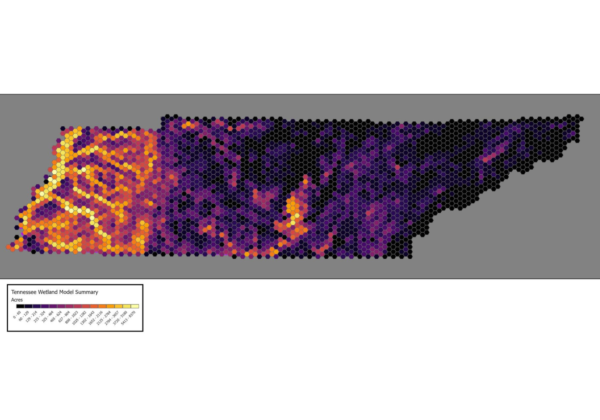
Leveraging the Latest Geospatial Technologies to Advance Wetland Identification
Launching Skytec’s Wetland Screening Tool for the State of Tennessee
Read More
Using GIS to Lead in Sustainable Supply Chain Management
At Skytec, we’re proud to partner with industry leaders like International Paper to develop innovative, GIS-based solutions that address complex challenges in sustainable sourcing and supply chain management.
Read More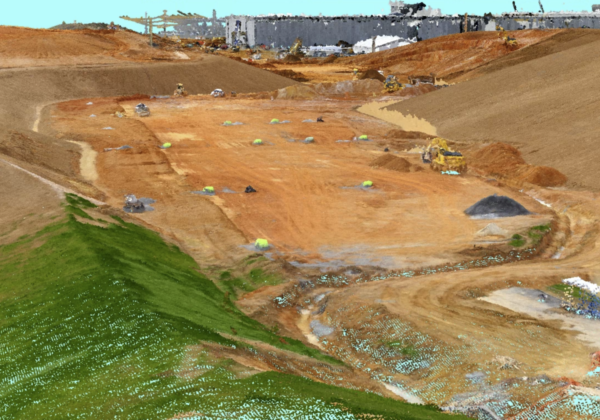
Skytec Delivers Macro- to Micro-Level Data to Support Decision-Making and Planning in Architecture, Engineering & Construction
Skytec’s expertise supports architecture, engineering, and construction (AEC) firms in evaluating and monitoring development sites from conception to completion.
Read More