Blog
Leaves Off, Leaves On — The View’s Exceptional Either Way
In the Southeastern U.S., we are very familiar with the changing of the seasons. In the spring, everything turns green and blossoms, filling the landscape with rich greenery and a dense forest canopy. In the summer, this canopy starts to dry out due to the intense heat — and in the fall, the leaves begin to drop from the trees in a colorful show.
Ever since the first cameras were hoisted onto balloons and aircraft for the purpose of aerial photography and mapping, trees, or specifically leaves, have presented a natural barrier. This was a major challenge for aerial mapping and imaging businesses. In the past, only winter or “leaf-off” collection and terrain mapping would produce reliable aerial data. Accurate mapping of what lies beneath the canopy relied on seasonal flying, interpolation, or good ole “boots on the ground.”
But today, that’s just not the case. With the advent of advanced full waveform LiDAR sensors and the ability to operate just above the canopy with aircraft, it is possible to collect and map any time of the year through full “leaf-on” conditions. With Skytec’s Unmanned Aerial Systems and complementary data capture capabilities, businesses can benefit from a robust 3D capture of everything from the ground up, no matter the season.
Why the Myth Persists That Leaf-Off Is Necessary
So, with this technology available, why does the thought still persist that leaves must be off trees before accurate data and imagery can be captured?
“The traditional mindset is that aerial data should be acquired in the winter,” says Andy Carroll, CTO at Skytec. “You must wait until the leaves are off; otherwise, you can’t see the conditions under the forest canopy. We see that mindset from businesses at every level, from national engineering companies all the way to small, one-person consultancies. It’s really across the board.”
It all goes back to what the technology looked like before. Even as recently as 15 years ago, data capture was much more reliant on “passive” techniques using cameras. Since then, LiDAR terrain mapping, or “active” techniques have become preferred.
“While LiDAR emerged as the technology of choice for terrain mapping, it wasn’t until the unmanned platform was available that you could achieve high-density mapping through leaves,” Carroll says.
What’s Changed
“It is this combination of powerful sensor and new vantage point that is making all the difference,” Carroll says.
Skytec’s hybrid-powered Unmanned Aerial Systems have changed the game when it comes to data acquisition. Our aircraft and LiDAR sensor system integrations can capture dense measurements on extended flight durations, all the way through forest canopy or cover to the ground.
This LiDAR technology, from Austrian company RIEGL, provides a high-density point cloud ideally suited for terrain mapping. Thanks to full waveform technology, other industries and applications such as forestry and agriculture are finding value, where capture of conditions through canopy or plant crowns is important.
The data and images captured using this technology are showing clients and prospective clients that there’s no need to wait until the trees are clear. An accurate view can be captured even through the foliage.
“When I’m talking with prospective clients, the first thing they say is, ‘Show me,’” Carroll says. “They want to see examples — and we have that. We’ve been able to fly in the southeast, where we’re basically in conditions of a temperate rainforest, and we’re able to capture great data.”
Because advances in our industry happen at such a rapid pace, our customers rely on us not only to provide the most accurate data, but also to remain aware of and utilize the most advanced technologies and data acquisition techniques.
“We’ve been doing this for more than four years at Skytec, and just within the last year, we’ve upgraded our technologies even further,” Carroll says. “Adding the RIEGL system last year really enhanced our capabilities.”
The 3D point clouds captured by this technology are quite amazing, even to those intimately familiar with the technology’s capabilities.
“It truly blows me away by how much we are able to capture,” Carroll says. “We recently flew a project in North Alabama, and the area was so densely forested that it was actually dark. With traditional aerial methods, there would have been no way we could capture it. But we did, all the way to the ground.”
Ready to see how our technology can capture the data you need at any time of year? To learn more or to put our technologies into action for your company, contact us today.
Skytec Blog
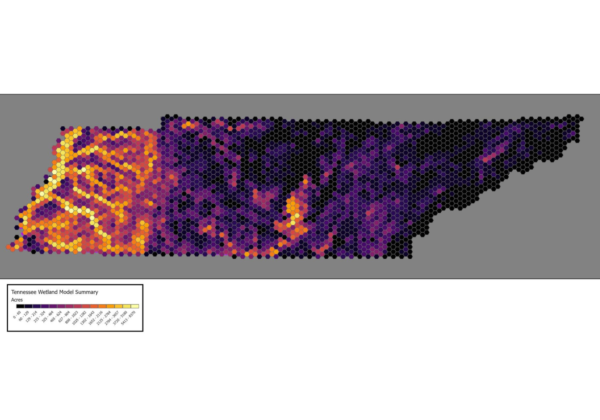
Leveraging the Latest Geospatial Technologies to Advance Wetland Identification
Launching Skytec’s Wetland Screening Tool for the State of Tennessee
Read More
Using GIS to Lead in Sustainable Supply Chain Management
At Skytec, we’re proud to partner with industry leaders like International Paper to develop innovative, GIS-based solutions that address complex challenges in sustainable sourcing and supply chain management.
Read More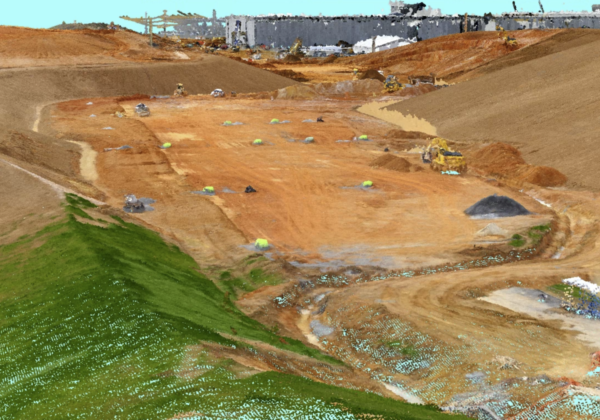
Skytec Delivers Macro- to Micro-Level Data to Support Decision-Making and Planning in Architecture, Engineering & Construction
Skytec’s expertise supports architecture, engineering, and construction (AEC) firms in evaluating and monitoring development sites from conception to completion.
Read More