Blog
Hybrid or Electric UAS?
Lately, there’s been a contentious debate about whether battery-powered unmanned aerial systems (UAS) are better than hybrid gas/electric systems, or vice-versa. Honestly, we’re not here to say which one is better or worse —and advancing technology could change the landscape at any moment. But we will say that according to our recent experience with the Harris H6 Hybrid system, we were extremely pleased with the way our new hybrid UAS handled a big job in some seriously harsh environments.
In late November, we, along with our working partner, Wingfield Scale, a nationally recognized weighing and measurement company, ventured to Michigan’s Upper Peninsula to visit two large mining sites. Our mutual client needed to measure the volumes of materials that had been cleared from a site, as well as the remainder of the materials on site. Traditionally, this kind of job requires extensive groundwork by field crews or the acquisition of lower-resolution data from manned aircraft. But with the frigid weather conditions and low cloud ceilings, manned aircraft would have had a very difficult time collecting the data we needed.
But, with our new Harris H6 hybrid system, we were able to significantly reduce the time required to scan the challenging terrain. Here are three advantages we enjoyed by using a hybrid UAS.
Challenging weather was not a problem
The Harris H6 hybrid system allowed us to perform in below-freezing temperatures accompanied by snow and high winds. We were able to achieve more than 76 minutes of flight time on a single mapping grid with the new system. If we had used an all-electric system with lithium batteries, we would have been significantly limited in those conditions. We would only expect to have less than 10-minute flight times with a battery-powered system in that kind of severe weather.
We could carry multiple payloads
By maintaining a consistent energy source with our new hybrid system, we could increase the electrical consumption from multiple sensors, allowing us to carry multiple payloads. We were able to carry a camera, our mapping laser scanners (LiDAR), a specialty sensor-like multi-spectral, or any combination of sensors. If we had used our electric-only, heavy-lift systems, carrying multiple payloads would have greatly reduced flight time and the corresponding area we could cover.
Flying longer means more consistency
Because our hybrid UAS could fly for much longer periods of time, we were able to collect high-accuracy data much more consistently. Before we had our hybrid system, we had to collect, then stop and land, then launch again and collect more data, and then stop and land again, over and over again. It took much more time to cover significantly less space than with our hybrid UAS.
The Bottom Line
We’re not saying, definitively, that all hybrid UAS equipment is better than their battery-powered alternatives. But we did learn from our northern Michigan adventure that we could not have completed that specific job in a satisfactory manner without our new hybrid system. By the time our job was done, we had mapped more than 2,400 acres. That would not have been feasible in such dicey weather conditions with an electric-only solution —not with the current state of battery technology, anyway.
Visit our Equipment page to learn more about the kinds of UAS and imaging equipment we use at Skytec.
Skytec Blog
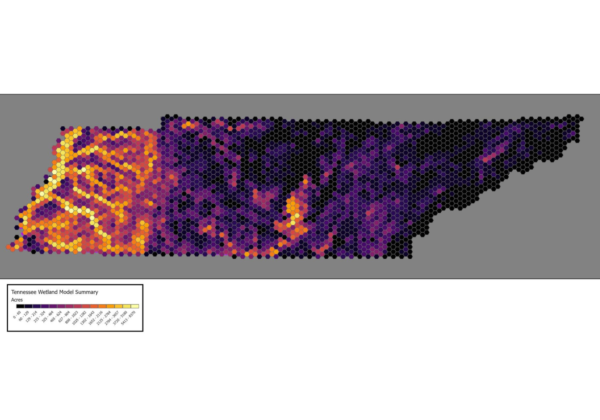
Leveraging the Latest Geospatial Technologies to Advance Wetland Identification
Launching Skytec’s Wetland Screening Tool for the State of Tennessee
Read More
Using GIS to Lead in Sustainable Supply Chain Management
At Skytec, we’re proud to partner with industry leaders like International Paper to develop innovative, GIS-based solutions that address complex challenges in sustainable sourcing and supply chain management.
Read More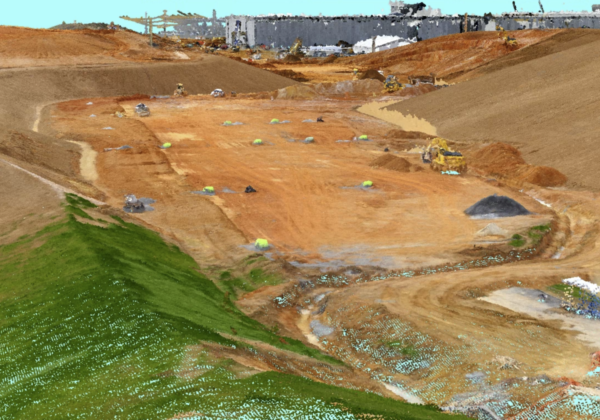
Skytec Delivers Macro- to Micro-Level Data to Support Decision-Making and Planning in Architecture, Engineering & Construction
Skytec’s expertise supports architecture, engineering, and construction (AEC) firms in evaluating and monitoring development sites from conception to completion.
Read More