Blog
Employing Mapping and Satellite Imagery for Emergency Response
Wildfires. Flooding. Hurricanes. Tornados. Major environmental disasters and the resulting recovery process demand an immediate, accurate response to deliver emergency aid to individuals, identify lost infrastructure, and jumpstart the response to a crisis.
GIS mapping and the use of UAS imaging have made headlines in past storms and emergencies — consider Hurricane Harvey in 2017 and its impact on Houston. Recently in Southeast Tennessee, the City of Chattanooga, Hamilton County, and private and public partners including Skytec worked quickly for a collaborative community initiative to help inform cleanup and recovery efforts following the April 2020 tornadoes that left widespread damage in their wake.
We can’t prevent natural disasters — but with UAS data and the advent of global satellite imagery, municipalities, supporting agencies, and major utilities can leverage mapping tools and imagery to aid emergency response. Today, we’re talking with industry leader Rick Lusk to discuss what steps can be taken now to better prepare for rapid response when disaster strikes.
Evaluating Assets Before an Emergency
Rick Lusk, owner of Oculus Deus, LLC and former director of the UAS Research Center at Oak Ridge National Laboratory, brings more than two decades of experience providing strategic guidance and assistance for commercial and governmental UAS use. When faced with evaluating risk and emergency response, Lusk says, utilities and agencies with major assets can turn to enterprise architecture and workflow assessment to incorporate useful tools like satellite imagery and UAS.
Utilities and municipalities can create emergency response protocols, to include baseline satellite imaging and data acquired from UAS sensors, which enable an organization to pivot and act as needed in the case of an emergency.
“It’s crucial to evaluate the ‘as-is,’ or existing assets, and the ‘to-be,’ or the future state, in building an appropriate strategy for responding to emergencies. Companies need to plan for the funds and support required in the case of an emergency or event,” Lusk says. “Satellite imagery provides a baseline for agencies. That image database can be paired with normalized difference vegetation index (NDVI) data sets, federal databases that show hospitals and childcare centers, for example, with a municipality’s metadata layered in — all of those pieces can be combined in a tool to show an accurate, artificial 3D view that can drive emergency response.”
This virtual before-and-after was demonstrated, to some degree, following the April 2020 tornados in the Chattanooga region as Skytec and other community partners recreated vegetation and infrastructure models to aid utilities, city and county departments, and FEMA (Federal Emergency Management Agency) recovery.
But with more advanced planning, agencies and utilities can develop dynamic tools and resources for asset management in partnership with Skytec.
“As a silver-level ESRI partner and Planet gold partner, we’re able to provide companies a thorough understanding of existing assets in order to create a clear before-and-after picture when a storm or other natural disaster strikes,” says Andy Carroll, CTO of Skytec. “This type of front-end inventory of infrastructure, assets, and resources enables organizations to be prepared and have a system in place to quickly respond in an emergency.”
“These tools piece together accurate, robust data collected early on,” Lusk says. “Then emergency response can begin by evaluating the differences in maps. Using UAS combined with satellite images allows organizations to more easily evaluate damage, and post-storm processing isn’t as complicated. I encourage agencies and organizations to build data sets as early and as robustly as possible and determine the best way to incorporate these pieces into an existing workflow.”
Contact Skytec to learn more about our consultation and mapping services and to build a strong emergency response plan for your organization.
Skytec Blog
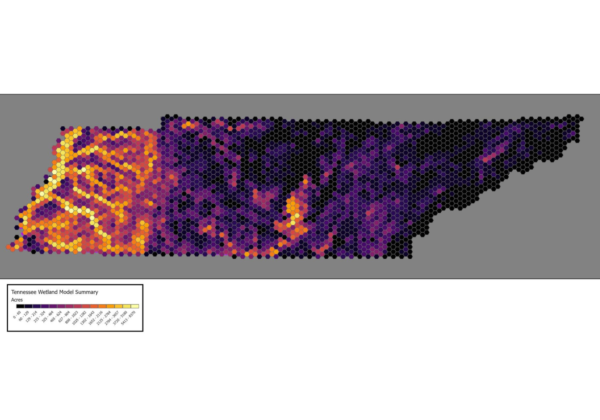
Leveraging the Latest Geospatial Technologies to Advance Wetland Identification
Launching Skytec’s Wetland Screening Tool for the State of Tennessee
Read More
Using GIS to Lead in Sustainable Supply Chain Management
At Skytec, we’re proud to partner with industry leaders like International Paper to develop innovative, GIS-based solutions that address complex challenges in sustainable sourcing and supply chain management.
Read More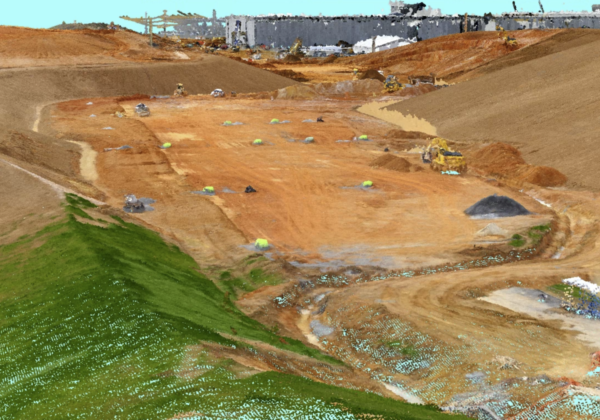
Skytec Delivers Macro- to Micro-Level Data to Support Decision-Making and Planning in Architecture, Engineering & Construction
Skytec’s expertise supports architecture, engineering, and construction (AEC) firms in evaluating and monitoring development sites from conception to completion.
Read More